Commissioned by the Natural Environment Research Council (NERC), the Discovery Building is part of the modernization of the British Antarctic Survey’s Rothera Research Station, strengthening Britain’s leadership in polar climate, biodiversity, and ocean research.

Challenge
The design solution needed to update and restore the infrastructure while consolidating a series of outdated structures into a new 50,000 square foot facility. Minimizing environmental impact and embracing the highest environmental standards was critical to this project.
Solution
Named for the discovery of Antarctica 200 years ago, the building incorporates a thermally efficient envelope, heat recovery generators, thermal stores, and occupancy-based ventilation, while vibrant colours, natural light, and open workplaces support wellbeing during winter months. We are delivering concept design as part of the Antarctic Infrastructure Modernisation Programme (AIMP) team with BAM, Sweco, Hugh Broughton Architects, Ramboll, and Turner & Townsend.
Outcome
Renewable energy technology such as photovoltaic solar panels has been incorporated into the design of the building. The building will minimize snow accumulation around the perimeter with the use of a wind deflector, the largest of its kind in Antarctica.

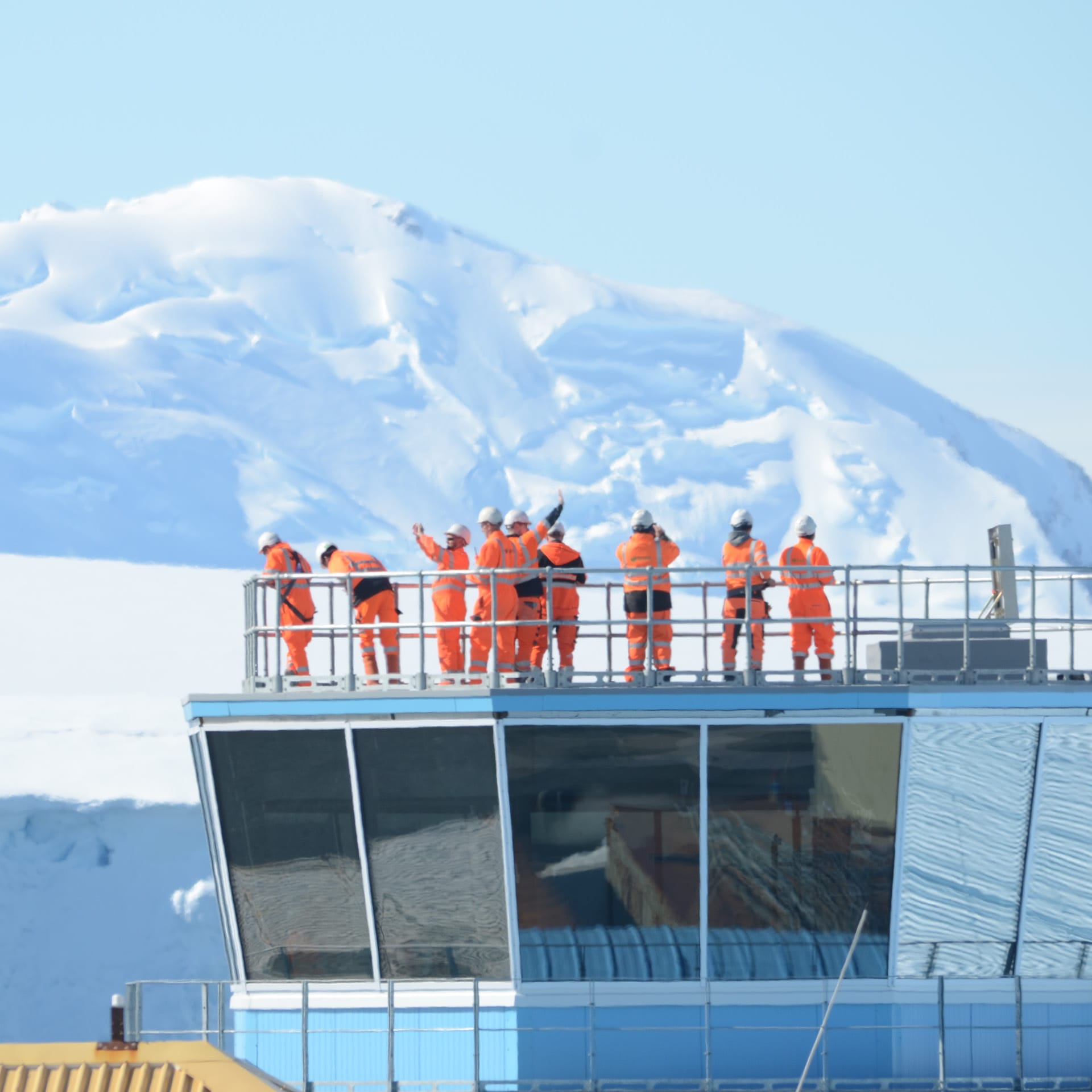
Delivered through the Antarctic Infrastructure Modernisation Programme (AIMP), the Discovery Building consolidates a series of outdated structures into a single 50,000-square-foot research facility at Rothera Research Station.


Photo Credits: Jake Martin, Ciara McDonald, Eliot Perez, BAS